





The question that actually holds up the purchase of a post driver is almost never which model to choose. It is a harder one: whether the money the machine costs comes back or not.
It is a fair question and it has a numerical answer. It does not depend on the brand or the brochure: it depends on how many posts you drive in a year, what an hour of labour costs you and what your ground is like. This article does not tell you what to buy. It gives you the calculation so you can do it yourself, with your own figures, and so you know the cases where the answer is no.
How many posts you drive by hand in a day, and at what price
Driving posts with a sledgehammer is a two-person job. One holds the post and keeps it plumb, the other swings, and they take turns because nobody lasts a full day swinging above head height. That detail is the one usually left out of the calculation: cost per post is not worked out with one wage, it is worked out with two.
The calculation: wage, hours and posts per hour
The formula is short:
Cost per post = (hourly labour cost × number of people) ÷ posts driven per hour
All three figures are yours, and it is worth measuring them rather than guessing. The easiest to measure and the one that varies most is the third. Time a full run on an ordinary day, mid-morning and again mid-afternoon, and take the average: the difference between the two will surprise you.
So the example is clear, here are some sample figures you should replace with your own. Say labour costs €15 per hour per person, two people are working, and between them they drive 12 posts an hour. Driving works out at €2.50 per post. Over an 8-hour day, about 96 posts and €240 in labour.
Change any one of the three numbers and the result moves a long way. That is why the calculation is only worth doing with your real figures.
The costs nobody counts: the broken post and the split head
Three items have to be added to the labour bill, and they almost never appear in the quote:
- The split head. The sledgehammer blow crushes the head of the timber. Water gets into a post with an open head, and a post that takes in water rots sooner. You do not pay for it today: you pay for it when it has to be replaced.
- The post driven off line. If the post goes off line you have to pull it and start again. That post usually ends up on the scrap pile, and you have paid twice for the work of driving it.
- The drop in output. The posts driven in the last hour of the afternoon do not go in at the rate of the first hour of the morning, and they do not go in as straight. Fatigue is a cost, even if it never shows up on an invoice.
If you want an honest calculation, keep a note for a week of how many posts end up rejected. That percentage, applied to what a post costs you, is money you are already spending without seeing it.
The same job with a petrol post driver
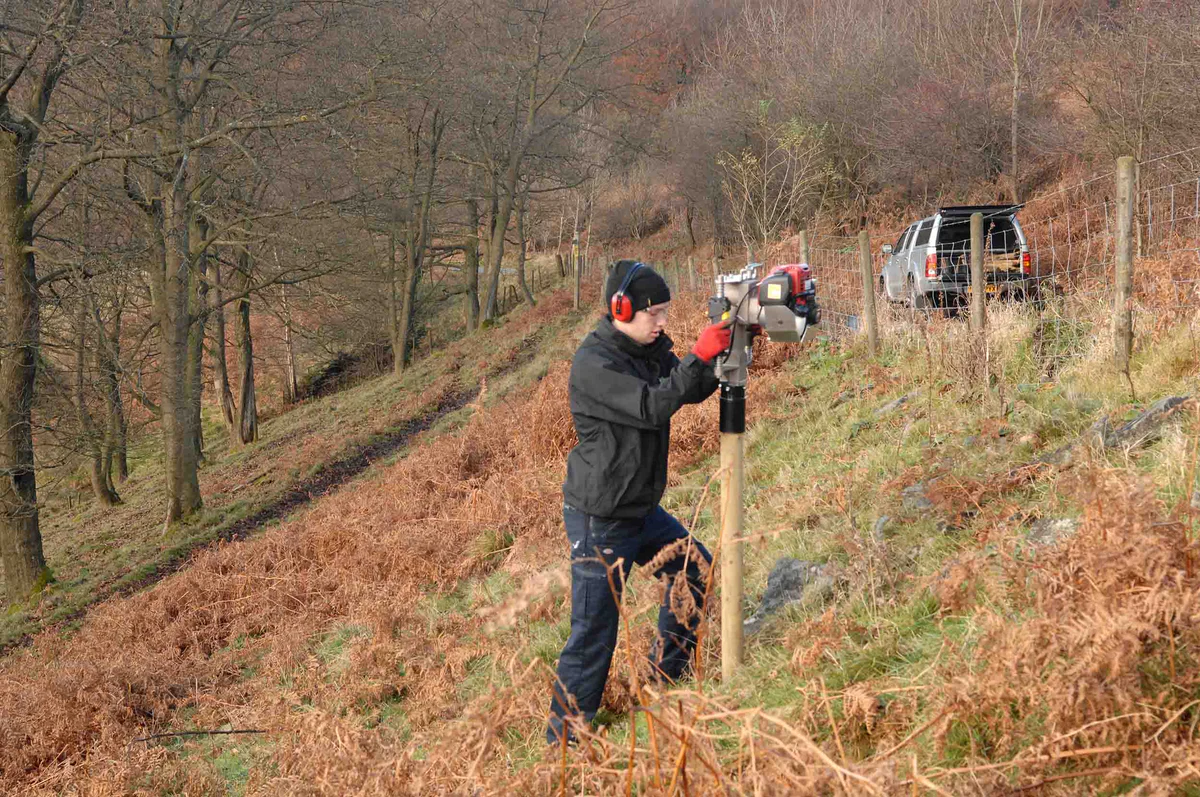
With a stake and post driver the way the work is organised changes in something more important than speed: it becomes a one-person job. Whoever was holding the post is freed up for another task, and that alone halves the multiplier in the formula above.
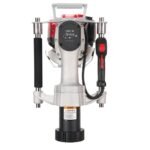
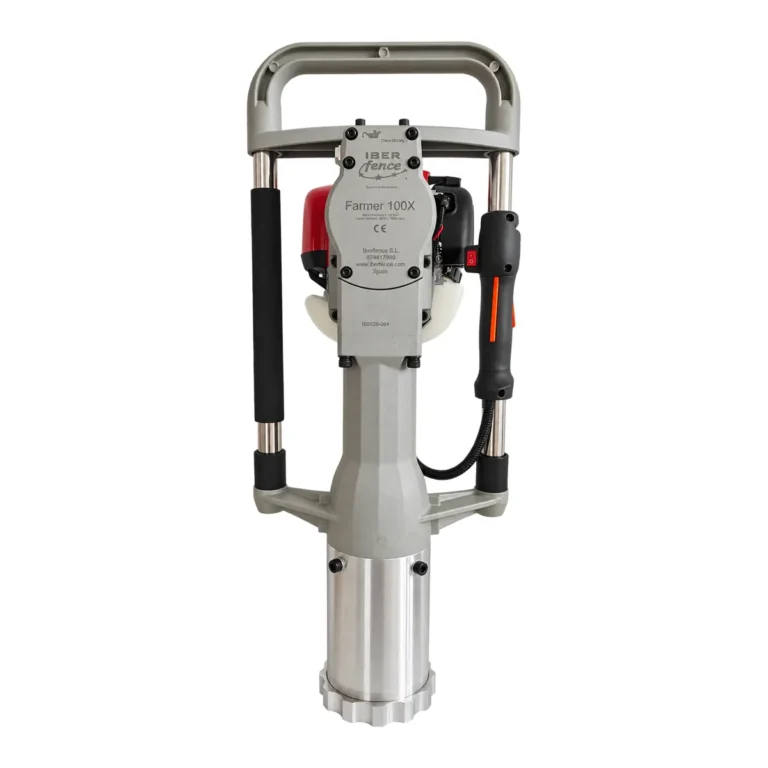
The Farmer 100X weighs 18.80 kg and delivers between 1,500 and 2,200 blows per minute, with an impact energy of 43.3 to 58 joules depending on the engine fitted. That frequency is why one person gets ahead: the post goes down through an accumulation of fast blows, not through the force of any single one.
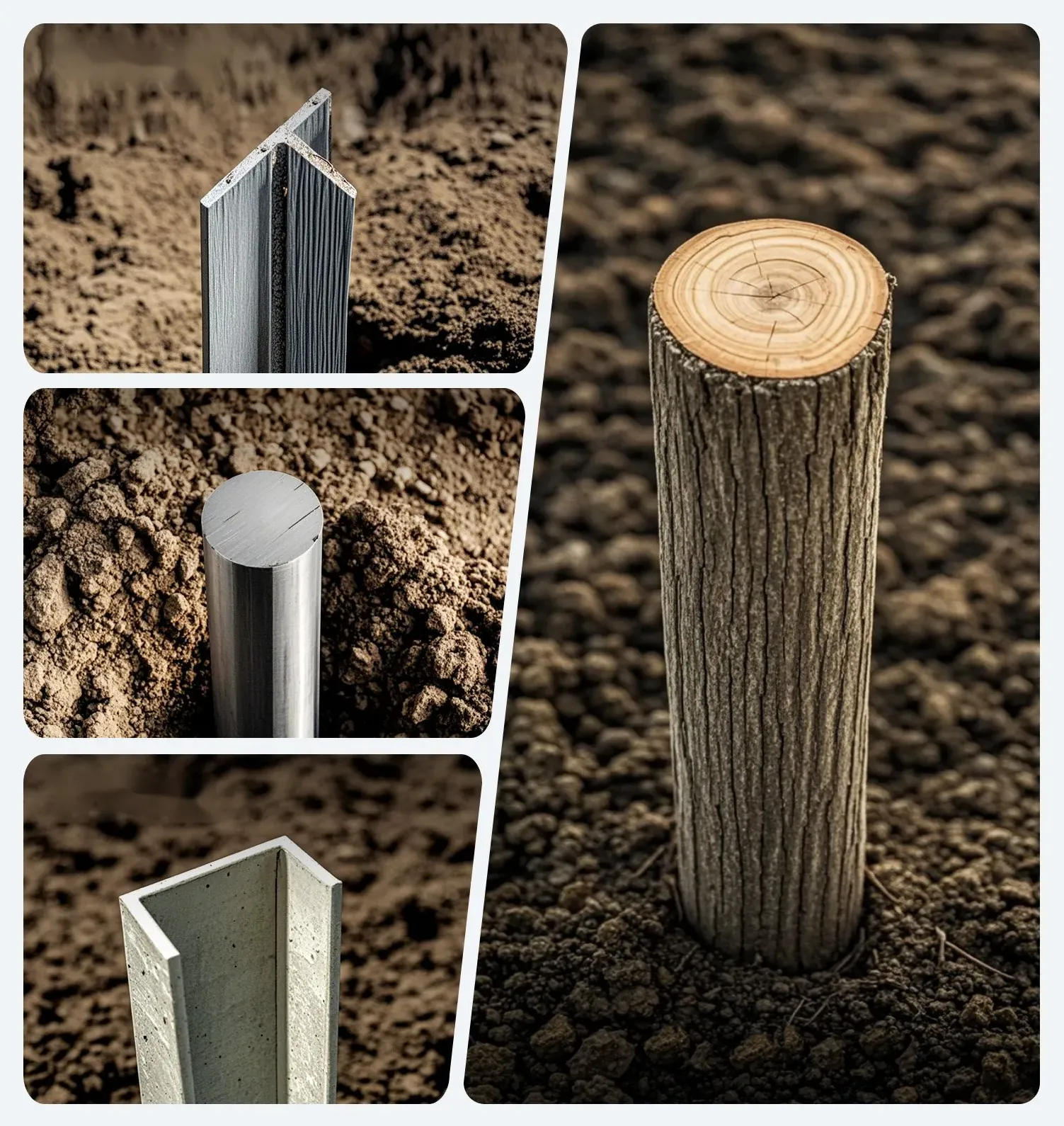
Where the difference shows most is on the posts that resist by hand. Acacia is the classic case: a dense, tough timber that holds extremely well in the ground, which is why it is so widely used in vineyards and stock fencing, but driving it with a sledgehammer punishes both the head of the post and the person swinging. With fast blows the post goes down by accumulation and the head comes through intact.
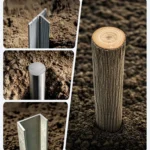
And not only timber. The Farmer 100X also drives metal profiles: angle posts and T-posts, the two common ones in fencing and perimeter protection, as well as round, square and corrugated sections. Each profile goes in with the nose piece or adapter that suits it, and changing over needs no tools: unscrew the collar, fit the adapter, screw it back on.
The calculation is the same, with two new variables: fuel and paying off the machine.
Output by ground type
There is no single figure here, and anyone who gives you one is simplifying. Output depends on the soil:
- Loose or cultivated ground. The easy case. The post goes in without resistance and the pace is set by positioning and plumbing, not by driving.
- Compacted ground or dry clay. Driving takes longer, and it is worth checking the depth actually reached, because it is easy to come up short without noticing.
- Stony ground. The least predictable. You get posts going off line and broken points, and output stops depending on the machine and starts depending on your luck with the stones.
The practical advice: measure your output on the farm or site where you work most, not on the easiest one. The figure that helps you decide is the one from your usual ground.
Fuel consumption per day
The Farmer 100X uses a maximum of 0.71 litres per hour. Over an eight-hour day that is about 5.7 litres: at €1.60 a litre, a little over €9 of petrol a day. It is worth seeing in proportion, because it is the item most people overestimate before buying and the one that weighs least afterwards: that fuel is around 7 % of what the day costs, and the other 93 % is the person operating the machine. Use 92 octane petrol or higher.
Break-even: how many days it takes the machine to pay for itself
There is a way of doing this calculation that does not depend on how many posts you drive per hour, and it is the sounder of the two: compare the cost of a full day. By hand you need two people. With the machine, one. As long as the operator with the machine gets through at least as many posts as the pair with sledgehammers, the calculation stands up without measuring anything else:
Days to pay off = price of the machine ÷ (cost of a day by hand − cost of a day with the machine)
Carrying on with the example above: a day by hand is €240, two people at €15 an hour for eight hours. A day with the machine is €120 for one person plus around €9 of petrol, so €129. The difference in the machine's favour is about €111 a day. Again, the wage and the fuel price are assumptions; yours will be different.
Example with the Farmer 100X: from €1,049.00 + VAT with the Iberfence IBF-37 engine
The Farmer 100X is our Farmer range post driver, made in our own works. Fitted with the Iberfence IBF-37 engine it starts at €1,049.00 + VAT.
With a saving of €111 a day, the machine is paid off in about ten working days. From there on, every day you use it works in your favour.
Example with the Honda GX35T engine: from €1,299.00 + VAT
The same machine with the Honda GX35T engine starts at €1,299.00 + VAT. With the same daily saving, break-even moves to just under twelve days.
There are three engines available: the Iberfence IBF-37 from €1,049.00 + VAT, the Honda GX35T from €1,299.00 + VAT and the Honda GX50T from €1,349.00 + VAT.
| Engine | Price from | Days to pay off* |
|---|---|---|
| Iberfence IBF-37 | €1,049.00 + VAT | ≈ 9.5 |
| Honda GX35T | €1,299.00 + VAT | ≈ 11.7 |
| Honda GX50T | €1,349.00 + VAT | ≈ 12.2 |
* With the saving in the example: €111 a day. With your own figures, the result will change.
The difference between them is not only price: impact energy, those 43.3 to 58 joules, depends on the engine you fit. If you are going to drive acacia or work regularly in compacted ground, that step matters in the decision, and it is worth looking at the jumps with the calculator in front of you. From the IBF-37 to the GX35T is €250, a little over two days of the kind calculated above. From the GX35T to the GX50T is €50, less than half a day: if you are already going for a Honda, the step up to the GX50T pays for itself in a morning's work.
Put another way: the €250 between these two configurations comes back, in the example, in a little over two days. If you are going to use the machine intensively, or if Honda service is easier to come by in your area, that difference is small against the working life of the whole unit. If use is going to be occasional, the IBF-37 configuration does the job perfectly well.
When the calculation does not work: cases where buying does not pay
Worth saying plainly, because a machine standing idle saves nothing:
- You are going to drive a few posts and do not expect to repeat. If your horizon is thirty posts to fence a vegetable plot and nothing more, hiring one or using the sledgehammer comes out better.
- Your ground is mostly rock. Where stone rules, the problem is not solved with driving speed but with a different anchoring system.
- Nobody is going to maintain the machine. Ten minutes at the end of the day are the difference between a machine that lasts years and one that gives trouble in its second season. If there is nobody to do them, the payback calculation will not hold.
What to check before deciding
Post diameter and stake length
This is the check that avoids the most grief: measure the diameter of the posts you normally use, including corner and strainer posts, which tend to be thicker, and make sure they fall within the machine's range. The Farmer 100X takes up to 100 mm diameter as standard, with the nose piece already in the case. 120 mm is only reached with the optional adapter, which is not included. Look closely at that difference before buying: if your corner posts go over 100 mm, the 120 mm adapter is extra and is worth budgeting for from the start.
Also look at stake length and the height you will have to work at: a long stake on sloping ground changes the handling considerably.
One detail that affects the calculation: the Farmer 100X is supplied with the 100 mm nose piece and the 45, 60 and 78 mm adapters included, along with the transport case and the maintenance tools. For the usual diameters there are no accessories to add to the price.

With that set it covers the jobs it is normally used for: fencing and enclosures for farms and livestock, vineyards, fruit and vegetable plantations and greenhouses, stakes in parks, nurseries and forestry operations, micropiles for foundations and fixings, pegs for large marquees and tents, and perimeter protection on roads and shooting estates.
EC Declaration of Conformity and the paperwork that must come with the machine
Any machine put into service in the European Union must be supplied with its EC Declaration of Conformity and its instruction manual in the user's language. This is documentation, not advertising: ask for it before you buy and keep it, because it is what backs you up in an inspection and what you will need if there is ever a claim. Check too that the manual includes the noise and vibration figures and the personal protective equipment instructions.
In short
Do the calculation with your own figures before you look at catalogues. Count the two people needed by hand, add up the posts you reject, work out what a day costs you each way and divide the price of the machine by the difference. The answer will come out in working days, which is the unit that really matters.
If the calculation works for you, the next step is choosing the model according to your post diameters and your volume of work. We cover that in our guide How to choose a stake and post driver, and if you would rather talk it through with someone before deciding, write to us with the diameters you handle and your soil type and we will advise you.