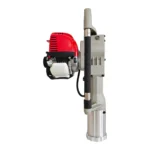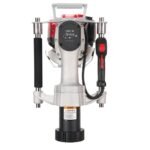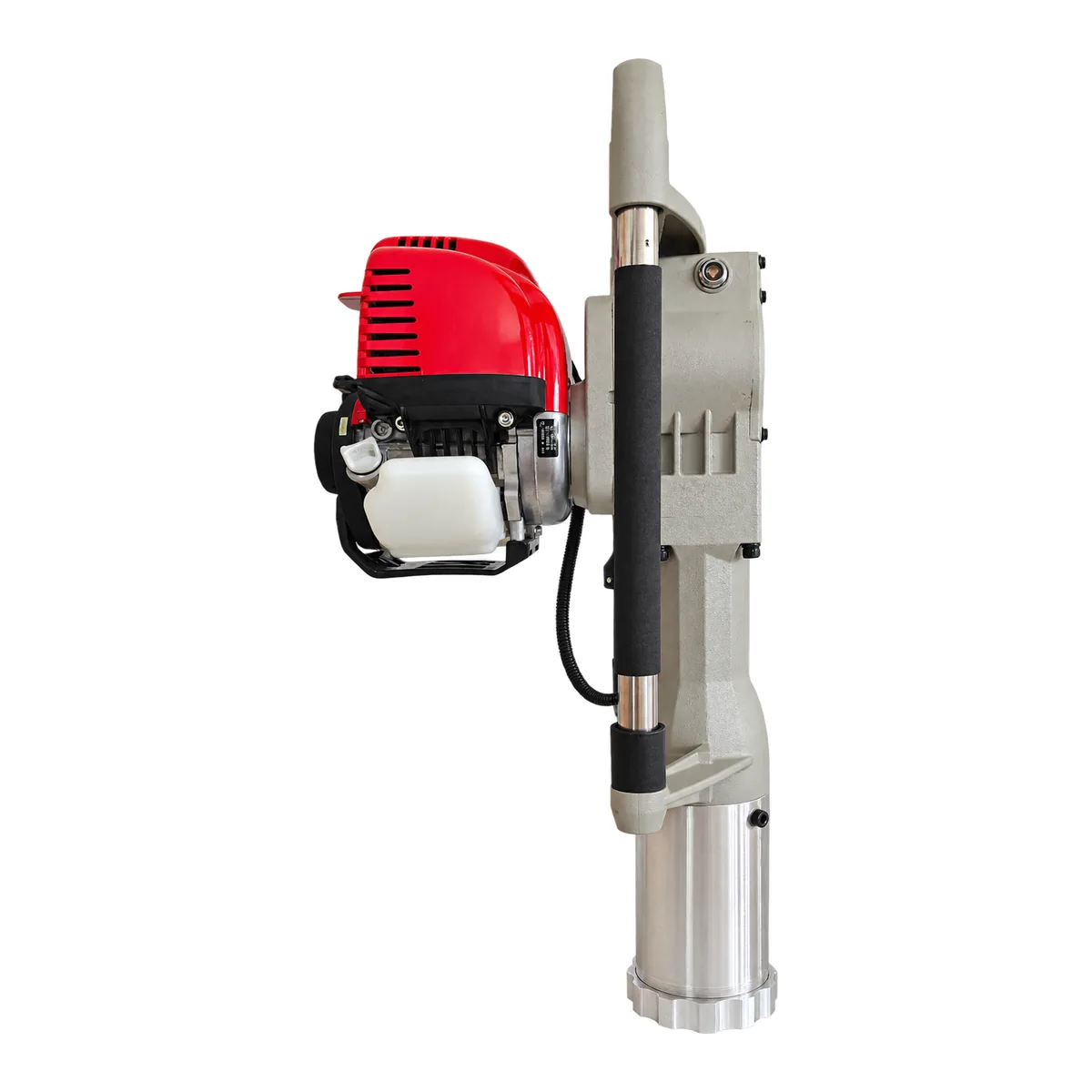







If you are looking for a petrol post driver (also called a post rammer or post knocker), this guide will help you choose the right model according to post diameter, type of ground and frequency of use. In a few minutes you will know which machine you need.
What is a post driver?
It is a motorised tool that drives posts directly into the ground with high-frequency blows. Unlike traditional methods (manual mauls, tractor-mounted drivers or digging and concreting), a petrol post driver is operated by one person and needs no compressor and, in most ground, no pre-drilled hole.
The 4 key questions before you buy
1. What post diameter will you be driving?
This is the most important criterion. Each model accepts a maximum diameter through its chuck, and with adapters you can also work with thinner posts:
- Up to 80 mm: Farmer 80X post driver, light and versatile, with 3 adapters included.
- Up to 82 mm: IBF-82X PRO post driver, with a four-stroke Honda GX35 engine and adapters included.
- Up to 100 mm (120 mm with the optional adapter): Farmer 100X post driver, for thick posts and hard ground.
- Up to 107 mm: IBF-107 by Easypetrol post driver, with optional adapters for round, square, rectangular and angle posts.
2. What ground will you be working on?
Iberfence post drivers work in soft, compact, clay and sandy soils, even with small stones. For particularly hard or stony ground, it is advisable to choose a model with more impact energy, such as the Farmer 100X. They cannot drive into rock, cement or concrete.
3. How often will you use it?
For intensive campaigns (vineyards, fencing companies, livestock farming) we recommend the IBF-82X PRO, with a four-stroke Honda GX35 engine. For occasional use, the Farmer 80X or the Farmer 100X, with an Iberfence IBF-37 or Honda engine.
4. What type of post or stake?
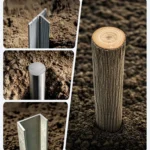
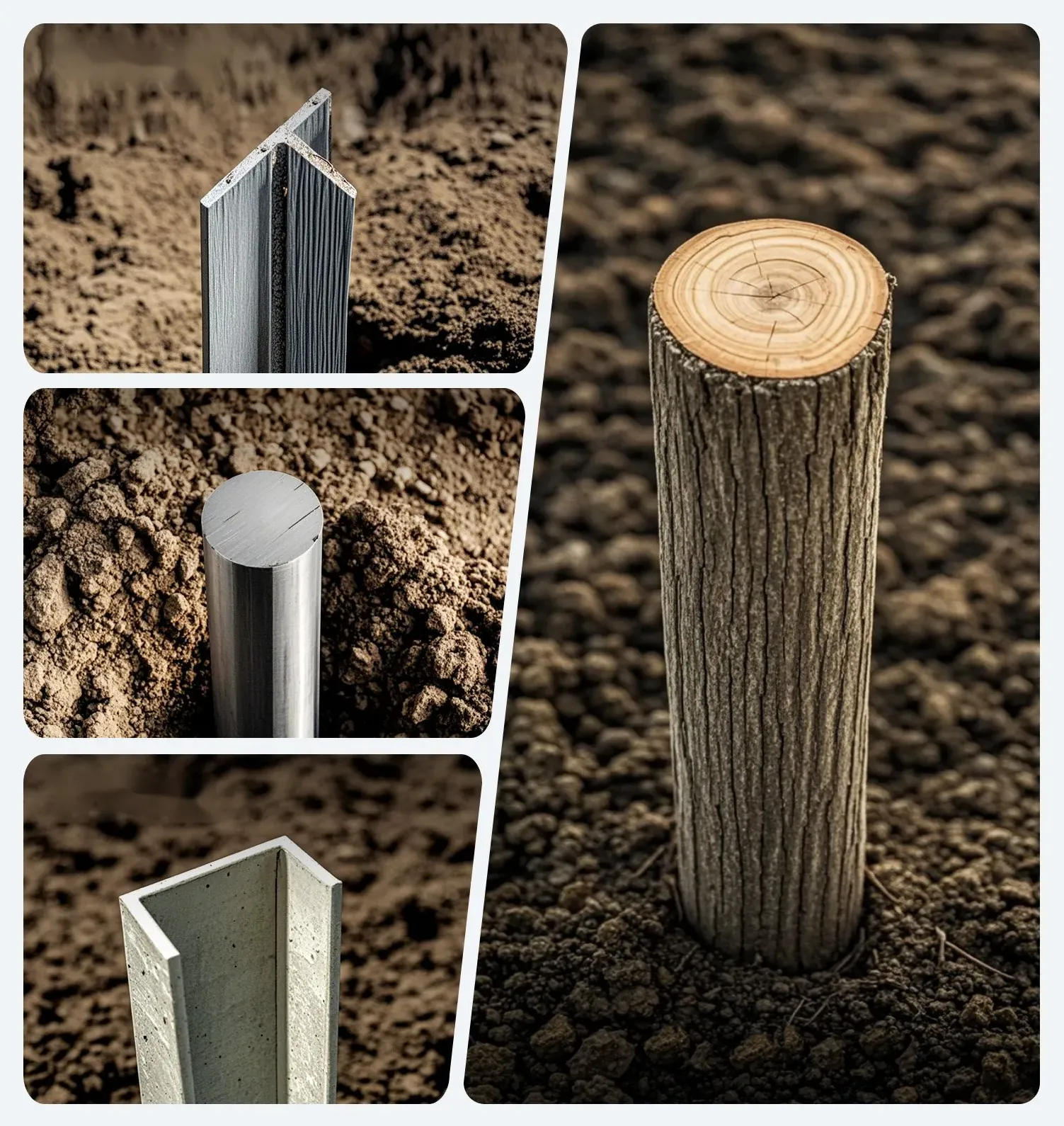
Wood, metal, PVC, fibreglass, L-profiles (angle iron), T-posts or tent pegs: any post that fits through the chuck can be driven. With the adapters, the post stays centred and protected during impact.
Post driver, post rammer or post knocker: are they the same?
Yes. Post driver, petrol post driver, post rammer or post knocker are different names for the same family of machines: petrol-powered post drivers. In Spanish they are called clavadoras de postes or hincadoras de postes; in Italian, battipali; in French, enfonce-pieux; in German, Pfahlrammen; and in Portuguese, bate-estacas.
Quick comparison of Iberfence models
- Farmer 80X: posts from 20 to 80 mm · 15.5 kg · 1,500–2,000 blows/min · 36 J.
- IBF-82X PRO: posts from 20 to 82 mm · 18 kg · 1,720 blows/min · 36 J · optional extensions.
- Farmer 100X: posts from 20 to 100 mm (120 mm with the optional adapter) · 18.8 kg · 1,500–2,200 blows/min · 43.3–58 J.
- IBF-107 by Easypetrol: posts from 20 to 107 mm · 15.3–18 kg · 1,720 blows/min · 36–46 J.
Undecided between two models? Call us on +34 985 985 351 or send us a WhatsApp message on +34 650 480 508 and we will advise you with no obligation. You can also buy online with the price on display.
Frequent questions
Does it need a pre-drilled hole?
In most ground, no: the post driver drives straight into the ground and the post is firm from the very first moment.
How much fuel does it use?
According to each model's data sheet, up to 0.71 l/h for the Farmer 80X and the Farmer 100X, and 0.65 l/h for the IBF-82X PRO.
What warranty does it have?
3 years for private customers and 1 year for businesses and professionals (see conditions), with our own after-sales service and spare parts.